Can tarot answer yes or no questions?
Tarot was never built to hand you a clean yes or no. It was built to describe a situation in enough detail that you can decide for yourself, and that design does not bend easily into a verdict. Some readers still work toward a yes/no lean, and it is worth knowing how, and where it stops being useful.
Why doesn't tarot just say yes or no?
Because every card carries a cluster of meanings rather than a switch. The Tower can describe a collapse you should avoid or one you badly need; the Ten of Cups can describe a happy ending or a comfort you are settling for. Collapsing that range into a single word throws away almost everything the card was telling you. A reading works by connecting a card to your actual circumstances, and a binary answer skips that step entirely.
How do people try to get a yes or no anyway?
The most common method is a single card treated as a lean. You ask a closed question, draw one card, and read its overall tone, upright and active cards read as encouraging, blocked or difficult cards read as cautionary. Some readers use a fuller single-card draw and weigh the whole meaning rather than just its polarity, which tends to produce something closer to honest guidance than a scoreboard result.
A second method assigns polarity to a small deck of cards ahead of time, so many majors and court cards count as yes, reversals or certain minors count as no, and a few sit deliberately undecided. This turns the deck into something closer to a coin with 78 faces. It can be a fun, low-stakes way to play, but the "answer" reflects the scoring system someone set up beforehand, not anything the cards independently know.
Is a yes/no reading ever worth doing?
As a quick temperature check, sure, the same way flipping a coin can clarify how you actually feel about an outcome once it lands. Treat the draw as a nudge you get to argue with, not a ruling. If the card says "no" and your stomach drops with disappointment, that reaction has told you more than the card did.
What's a better question to ask than yes or no?
An open question that asks what a card can actually see: what is really driving this decision, what you are avoiding, or what a specific choice would cost you. "What do I need to understand about taking this job" will draw out far more from a card than "should I take this job", because it invites the card to describe rather than to rule. If you are new to phrasing questions this way, the beginner's guide walks through building a question a reading can actually answer, and the card library shows how much nuance sits inside a single card once you stop flattening it to a lean.
What does Auspice do with yes/no questions?
Auspice will draw the card you ask for, but it reads toward the fuller picture rather than a verdict, surfacing what the card suggests you consider instead of forcing a binary. If you type a closed question, expect a response that opens it back up, because that is where a reading actually earns its keep. For a broader sense of how a session works, the learn hub covers reading styles beyond the single lean-in draw.
Frequently asked questions
Is a yes/no tarot reading accurate?
Nothing exists to measure it against, so "accurate" doesn't really apply here. A yes/no draw gives you one card's lean on a question with two sides, a starting point for your own judgment rather than a result you could check or grade.
What tarot card means yes?
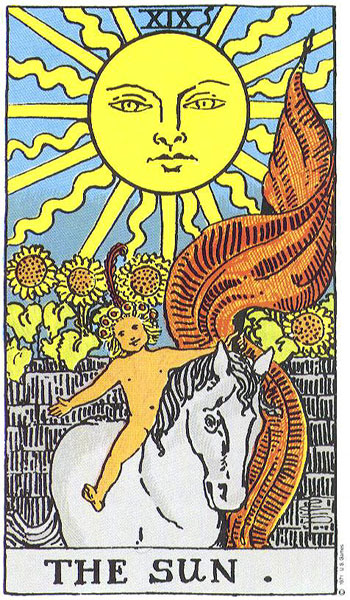
No single card means yes on its own. Some readers treat upright, active cards like the Sun or the Ace of Wands as a lean toward yes, and blocked or reversed cards as a lean toward no, but this is a convention someone chose, not a rule the cards enforce.
Can you ask tarot about a specific event, like will I get the job?
You can, but the card will speak to your position going in, your readiness, or what is in your control, rather than to the hiring decision itself. Asking what you can do to strengthen your chances usually gets you a more useful answer than asking whether it will happen.
Why do some readers say never ask tarot yes or no questions?
Because a closed question invites you to outsource a decision to a card instead of examining it. The stricter view is not that yes/no is forbidden, but that it wastes what a reading is good at, which is showing you the shape of a situation, not settling it.
Is it bad to ask tarot the same yes or no question twice?
It rarely helps. Reshuffling until you like the answer turns reflection into bargaining. Stay with the first reading, or reword the question as an open one that gives you more to work with.