How to read tarot cards
You read tarot by drawing a card, noticing what its image stirs in you, and connecting that to the question you asked. No psychic gift and no memorizing a book required, just a deck, some curiosity, and a way of looking. This guide takes you from what tarot is for to laying your first three-card spread.
What is tarot actually for?
Tarot is for seeing your own situation more clearly, not for predicting what happens next. It is a deck of 78 illustrated cards, and a reading is a way of thinking with those images. When you draw a card, its picture and meaning give you a prompt: a fresh angle on a situation, a feeling named, a question you had been avoiding. Read this way, tarot sits alongside journaling and quiet reflection as a tool for self-understanding. It never replaces your own judgement.
What is in a tarot deck?
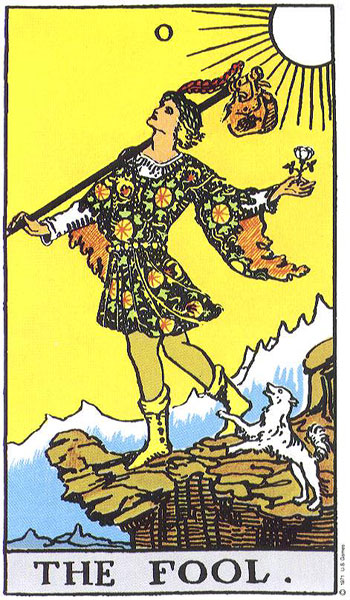
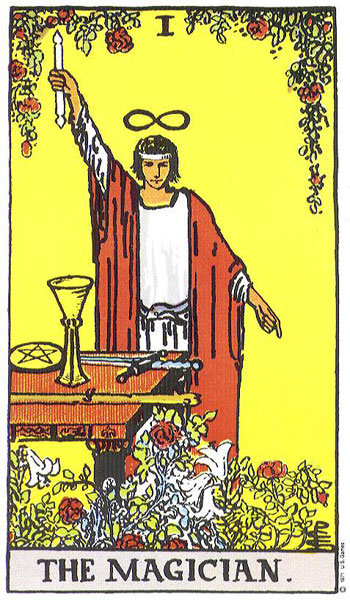
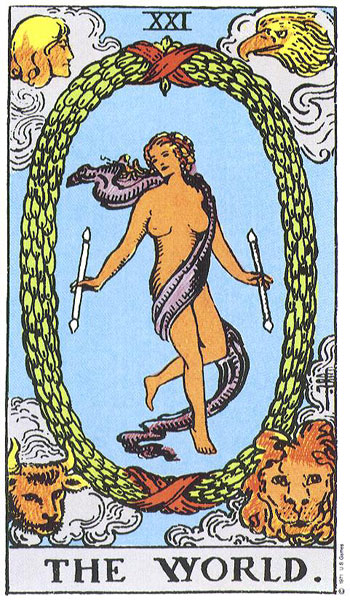
A tarot deck has two parts. The Major Arcana is 22 cards, from The Fool to The World, each carrying a large life theme such as change, endings, or trust. The Minor Arcana is 56 cards in four suits, closer to daily life: Wands for energy and drive, Cups for feeling and relationship, Swords for thought and conflict, and Pentacles for work and the material world. Each suit runs Ace through Ten plus four court cards. You do not have to learn all 78 at once. Once you understand the suits and numbers, you can read a card you have never studied. Browse the full library of card meanings any time.
How do you read a single card?
Start with the picture, not the book. Before you look anything up, notice what the image shows and what it stirs in you. Who is in it, what are they doing, what is the mood? Then read the card's meaning as a prompt to hold against your own situation, not a fixed verdict. If a card is upside down relative to you, that is a reversal, often a softer, blocked, or inward version of the same theme. A single daily card is the best practice there is: one image, one honest line of reflection.
How do you ask a good question?
A good tarot question is open and about you. Ask “what can I understand about this tension at work” rather than “will I get the job”, and “how can I approach this” rather than “what will they do”. Open questions invite reflection. Closed yes-or-no questions, and questions that ask the cards to predict someone else, shut it down and ask the cards for something they cannot honestly give. Keep the question in mind as you shuffle. You are setting a focus, not locking in an outcome.
How do you read your first spread?
A spread is the shape you lay the cards in, where each position asks its own question. The friendliest place to begin is a three-card Past, Present, Future or Situation, Action, Outcome spread. Shuffle with your question in mind, lay three cards left to right, and read each one in light of its position. When three cards feel natural, the whole spread library is there to grow into.
How do you connect the cards into a story?
A reading is a small narrative, not three separate fortunes. Once the cards are down, look at them together. Does one card answer another? Do two of the same suit suggest a theme, or a Major Arcana card raise the stakes? Say the reading aloud as a single, honest sentence or two: this is where you are, this is what it is asking of you. Trust the cards you actually drew. What comes up is what you work with.
How do you get better over time?
Practice beats study. Pull a card most days, write one line about it, and let the cards become familiar the way faces do. A journal turns single readings into a record you can look back on, where your own patterns start to show. This is exactly what Auspice is built for: you read with your own deck, and it remembers every reading so your practice compounds. If you want structure, Student Mode coaches you card by card until you can read confidently, for yourself and for friends.
What mistakes do beginners make?
- Reaching for the guidebook before looking at the picture. Your first impression is part of the reading.
- Asking yes-or-no or predictive questions, which the cards cannot answer honestly. Keep questions open.
- Re-drawing until you like the answer. Read the cards you got; the discomfort is often the point.
- Trying to memorize all 78 meanings at once. Learn the system, and the individual cards follow.
- Treating a hard card like Death or The Tower as a threat. They speak to change and release, not disaster.
Frequently asked questions
Can you teach yourself to read tarot?
Yes. Reading tarot is a skill you build by practice, not a gift you are born with. Start with one card a day, learn to describe what you see, then read the meaning as a prompt. A little every day teaches you faster than a rare long session.
How long does it take to learn tarot?
You can do a simple, honest reading within a few weeks of daily practice. Fluency, where the cards feel like a language, takes months of regular use. There is no exam, only a deepening familiarity.
Do you have to memorize all 78 cards?
No. You learn the cards by meeting them, not by cramming. Understanding the four suits, the numbers, and the Major Arcana themes lets you read a card you have never studied. Meaning comes from the system, not from memory alone.
Is reading tarot for yourself different from reading for others?
The skill is the same, but reading for a friend is a shared reflective conversation. You offer perspectives, not predictions, and you hold what comes up with care.
Does tarot tell the future?
No. In Auspice, tarot is a tool for reflection and self-understanding. It helps you see a situation more clearly and consider your own choices, never foretell what will happen.