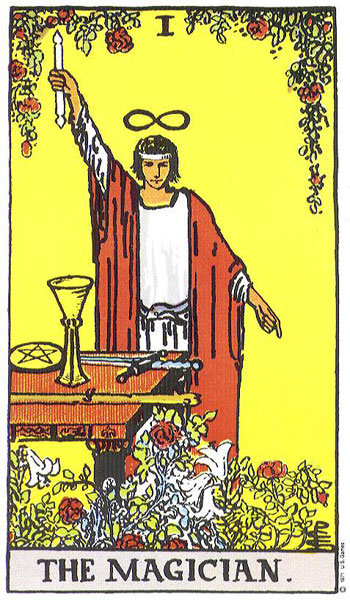
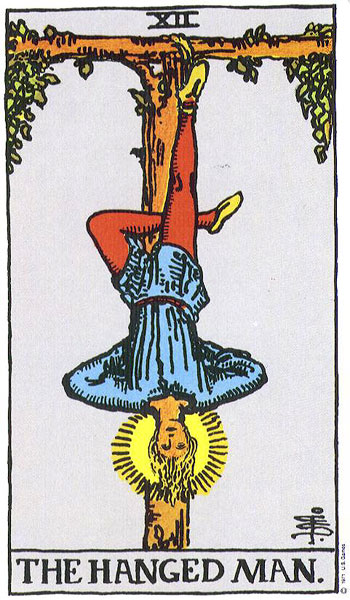
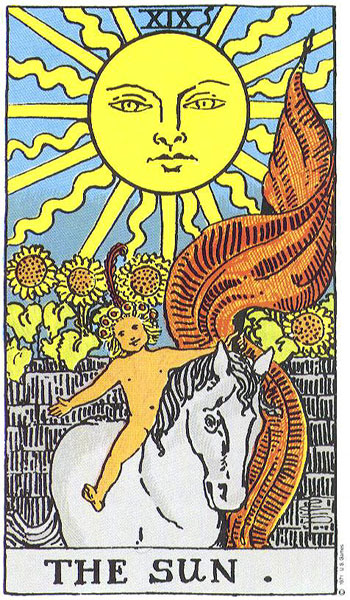
Reversed tarot cards
A reversed tarot card is one that lands upside down relative to you, and it usually softens, blocks, or turns inward the card's upright meaning rather than flipping it into its opposite. Reversals add nuance to a reading, and they are entirely optional while you learn.
Do you have to read reversals?
No, and many experienced readers never do. Reading upright only is a complete, legitimate practice: the cards around a card supply plenty of nuance on their own. Reversals are worth adding once the upright meanings feel familiar, so you are deepening a language you already speak rather than doubling the difficulty on day one. Pick one approach and keep it consistent within a reading.
How do you read a reversed card?
Read a reversal as a shift in how the upright meaning is showing up, then let the card and its neighbours tell you which shift fits. A reversed card typically moves in one of four ways.
The upright energy is present but dialled down, tentative, or fading. The Sun reversed is warmth behind a cloud, not darkness.
The energy is there but stuck, delayed, or being held back, often by you. Something wants to move and cannot yet.
The theme has turned inward. A card about outward action becomes a private, felt version of the same thing.
Too much of the upright quality, or its harder edge. Generosity tips into depletion; confidence tips into ego.
Every card page in the card library gives both the upright and reversed meaning, so you can look up any reversal as it comes. If you are just starting out, the beginner's guide walks through reading a single card first.
Are reversed cards a bad sign?
No. A reversal is not a warning and not bad luck. A reversed difficult card can actually ease its message, and a reversed gentle card often just means its gift is blocked or waiting. As with everything in Auspice, a reversed card is something to reflect on, not a fixed fate to brace for.
Frequently asked questions
What does a reversed tarot card mean?
A reversed card usually carries a quieter, blocked, or inward version of its upright meaning. The theme is the same; the way it is showing up has changed. A reversal is a shift in expression, not a reversal of meaning into its opposite.
Can you mix upright and reversed cards in one reading?
Pick one approach per reading and keep it consistent. Decide before you shuffle whether you are reading reversals or upright only, so a card's orientation always means the same thing within that spread and you are never guessing which rules apply.
Do reversed cards mean the same thing in every reading?
The kind of shift a reversal makes stays consistent, but what it points to depends on your question. A reversed card in a reading about work speaks to work; the same card in a reading about a relationship speaks to that. Read the reversal, then read it in context.
How do you get a reversed card?
If you shuffle in a way that turns some cards around, a card can land upside down relative to you, and that is a reversal. If you keep every card upright as you shuffle, you simply read upright meanings. Both are valid; pick the practice you prefer and keep it consistent.